
0 Comments

UTI Symptoms and Treatment in Women: Causes & How to Prevent It

Frequent Urination, Burning, or Lower Abdominal Discomfort? You Don’t Have to Ignore It

If you are experiencing a burning sensation while passing urine, frequent urge to urinate, or discomfort in the lower abdomen, it may be more than just a temporary irritation.

These symptoms are common sign in Urinary Tract Infection (UTI) — one of the most frequent health concerns among females.

While it can feel uncomfortable and worrying, the important thing to know is that it is very common and completely treatable when addressed at the right time.Lets put some light on UTI symptoms and treatment in women.

Understanding UTI in Women: Why It’s So Common

Urinary Tract Infection (UTI) is one of the most common health issues faced by every woman, and now becoming common in teenagers.Its feel frustrating how one day even simple things like urinating , sitting , traveling become uncomfortable and stressful.

Understanding the symptoms early can help you take the right steps at the right time.

➡️Lets know about common UTI symptoms and treatment , along with causes, prevention tips, and when you should actually see a doctor

What Are the Symptoms of UTI in Women?

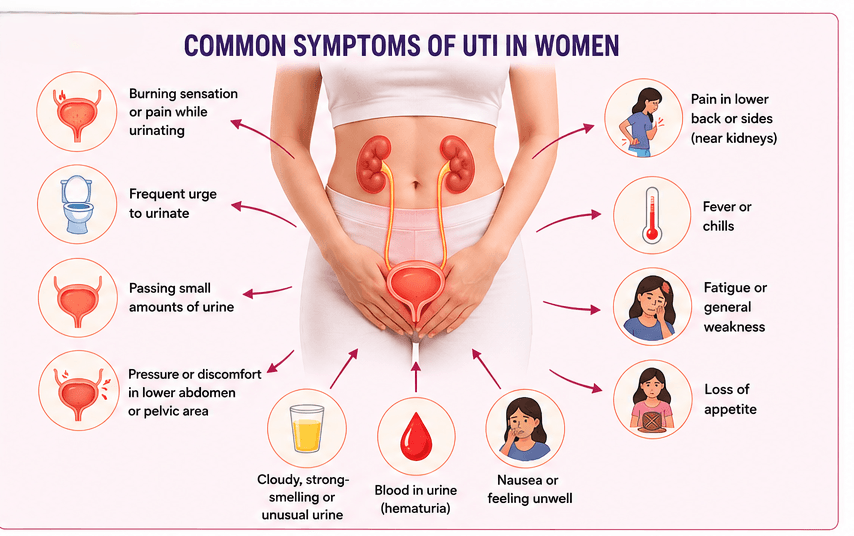
UTI symptoms are mild in the beginning , which is why most women don’t recognise them at first or ignore it . Here are the most common urinary tract infection symptoms female:

  • A burning sensation while urinating
  • Feeling the need to urinate frequently, even if only a small amount comes out
  • Mild discomfort ,pain or pressure in the lower abdomen
  • Cloudy, dark, or strong-smelling urine

💡 Sometimes women assume frequent urination is just because they’ve been drinking more water — but it can actually be one of the earliest signs of a UTI.

🔹 Advanced Symptoms You Should Not Ignore

  • Pain or heaviness in the lower abdomen or pelvic area
  • Presence of blood in urine
  • Fever or chills
  • Pain in the lower back (this may indicate the infection is affecting the kidneys)

If your symptoms are getting worse instead of improving, it’s a clear sign that the infection may be progressing and needs immediate medical attention. Early diagnosis of UTI symptoms and treatment can prevent further complications and helps you recover quickly. Consult your gynecologist now.

urinary tract infection symptoms female

What Causes UTI in Women?

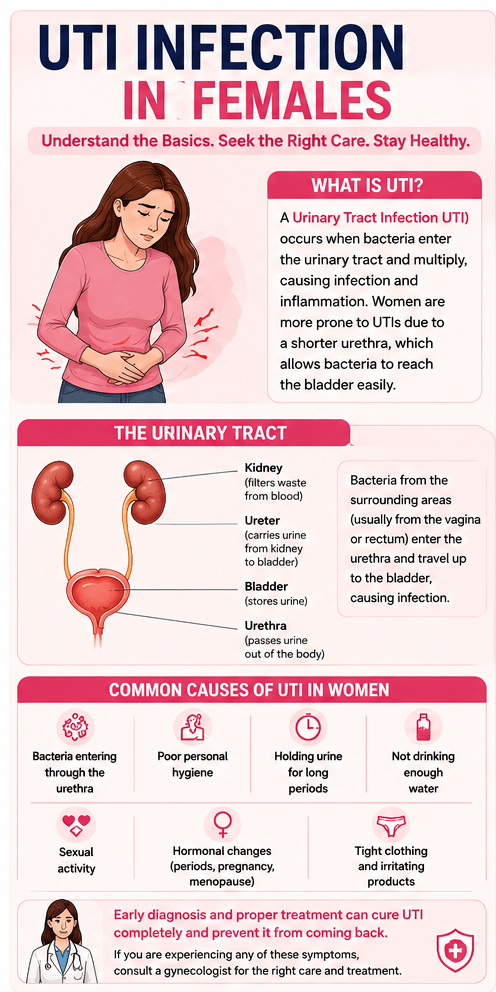
Understanding what causes a UTI can help you not only treat it better but also prevent it from happening again and again. While UTIs are very common, they usually don’t happen “randomly” — eating habits, body factors, hygiene and lifestyle patterns play an important role.

In most cases, UTIs are caused when bacteria (commonly E. coli) enters the urinary tract and starts multiplying. But the real question is — how does this happen?

Let’s break down the most common causes :

🔹 Poor Intimate Hygiene

One of the most common causes of UTI is improper hygiene.
For example, wiping from back to front after using the toilet can transfer bacteria from the anal area to the urethra, increasing the risk of infection.

One should maintain proper hygiene while using public washrooms / restrooms.Especially during periods you should keep the area dry as this is the time when your body is sensitive and prone to catch infection easily.Using of sanitary pads or tampons made with synthetic material or low quality material used will affect your vaginal hygenie.

🔹 Holding Urine for Too Long

Many women, especially during work hours or while travelling, try to hold urine for a long time due to multiple factors like no availability of toilets , not maintained public toilets or even it just becomes their habit to control/hold it for a longer period of time. This creates an environment where bacteria can grow inside the bladder which then leads to irritation and vaginal discomfort.

Regularly emptying your bladder helps in flushing out bacteria and reduces the risk of infection.

🔹 Not Drinking Enough Water

Low water intake is a very common but often overlooked cause.
When you don’t drink enough fluids, your body produces less urine — which means bacteria are not flushed out effectively.Hydration does not only means increasing water intake ,it means including enough fluids like lemon water , natural juices and eating high water content fruits and vegetables in your diet.

Staying well-hydrated is one of the simplest ways to prevent UTIs.

🔹 Sexual Activity

UTIs can sometimes occur after sexual activity, as bacteria may enter the urinary tract during intercourse.This is very normal and more common than many people realise.Not maintaining personal hygiene can lead to bacteria growing which then can transfer to your partner .

Urinating after intercourse can help reduce this risk.Cleaning the area with plain water will also help.Don’t use unprescribed vaginal washes as it may contain chemicals which disturb the pH level and can further lead to irritation in vagina or burning sensation. 

🔹 Hormonal Changes

Hormonal fluctuations during menstruation, pregnancy, or menopause can make women more vulnerable to UTIs by affecting the natural balance of bacteria in the body.

🔹 Certain Medical Conditions

Some underlying health conditions can increase the chances of developing UTIs, such as:

  • Diabetes
  • Kidney stones
  • Weak immune system

These conditions may make it harder for the body to fight infections effectively.Thus, the body catches the bacteria easily and leads to recurring UTI / urine infection.

UTI Treatment in Women: What Actually Works?

When a UTI starts, it doesn’t just feel like a minor discomfort — it can affect your entire day. The constant urge to urinate, the burning sensation, and the discomfort in the lower abdomen can feel both painful and distracting.

Naturally, most women want quick relief and start looking for the fastest way to feel normal again.

The important thing to understand is that UTIs are medical infections, and the right treatment depends on how early they are detected and how severe the infection is.

🔹 Medical Treatment

In most cases, doctors prescribe a short course of antibiotics to treat the infection at its root. These medicines are chosen based on the type of bacteria causing the infection and your symptoms.

Along with this, medication may also be given to reduce burning sensation or discomfort during urination.

Once treatment begins, many women start feeling better within a couple of days — but it is very important to complete the full course of medicine, even if symptoms reduce early.

👉 Stopping treatment midway is one of the most common reasons UTIs come back again.

🔹 What You Can Do at Home to Feel Better Faster

While medication treats the infection, your daily habits play a big role in recovery and comfort.

During this time, even small changes in your lifestyle can help ease symptoms:

  1. Drink more water than usual to help you flush bad bacteria out of your system.
  2. Avoid holding urine, even if you are busy or at work.Keep washroom sanitiser or chemical free wipes so that you are safe to use public washroom/restrooms.
  3. Cut down on caffeine, tea, spicy food, and alcohol for a few days as it may increase the body acidic level.
  4. Wear loose, breathable cotton underwear instead of fancy , synthetic fabric undergarments to reduce irritation.
  5. Maintain proper intimate hygiene, especially during recovery as your body is still prone to infection .

These steps don’t replace treatment, but they can make your healing process more comfortable.

🔹 Many Women Try to “Wait It Out” — But Here’s the Reality

A very common mistake is assuming that the burning or frequent urination will go away on its own.

Sometimes symptoms can temporarily reduce, but the infection will still remain in the body which then comes back stronger.

UTIs are not just discomfort — they are infections that need proper attention, especially if symptoms persist or worsen.

🔹 How Quickly Can You Expect Relief?

With proper treatment, most women start noticing improvement within 2 to 3 days. The urgency and burning usually reduce first, followed by gradual relief in discomfort.

However, even if you feel better early, it’s important to complete the prescribed treatment so the infection is fully cleared.

💡 Relatable insight:
Many women stop medication as soon as they feel better — but incomplete treatment is one of the biggest reasons UTIs keep recurring.

🔹 Why Early Treatment Matters

If ignored, a UTI can move beyond the bladder and affect the kidneys, which can lead to more serious symptoms like fever, back pain, and overall weakness.

That is why early treatment is not just about comfort — it is about preventing complications.

Dr Priyanka GuptaTaking the right steps at the right time helps you recover faster, avoid unnecessary discomfort, and reduce the chances of repeated infections .
 

Common Mistakes That Can Make Your UTI Worse

In real practice, one of the most frustrating things about UTIs is that many cases don’t get worse because the infection is severe — they get worse because of small everyday habits that seem harmless at first but become a solid reason for making bacteria grow in vagina.

Most women try to manage symptoms on their own in the beginning, which is understandable. The discomfort usually starts suddenly, and it feels like something that should settle quickly. But this is also the stage where the right care matters the most.

One of the biggest mistakes we make is simply ignoring the early signs. A mild burning sensation or slightly frequent urination often doesn’t feel serious enough and we tend to ignore it. Many women wait a day or two, hoping it will go away on its own. Unfortunately, infections rarely improve without proper treatment, and by the time care is started, the symptoms are often stronger and more uncomfortable.

Another very common issue is self-medication. It’s easy to take antibiotics based on past experience or suggestions from others, but UTIs don’t always work the same way. The bacteria causing the infection and the severity vary from person to person.Each woman’s body is different and can react differently according to the immunity system. Also hormonal changes according to age and individual lifestyle.When medication isn’t properly chosen or completed, the infection may temporarily improve but not fully clear — which is why it often comes back.

💡 The important thing to understand is that UTIs are very common, but recurring infections are usually linked to habits rather than severity. Small changes in daily routine often make a big difference in preventing them.

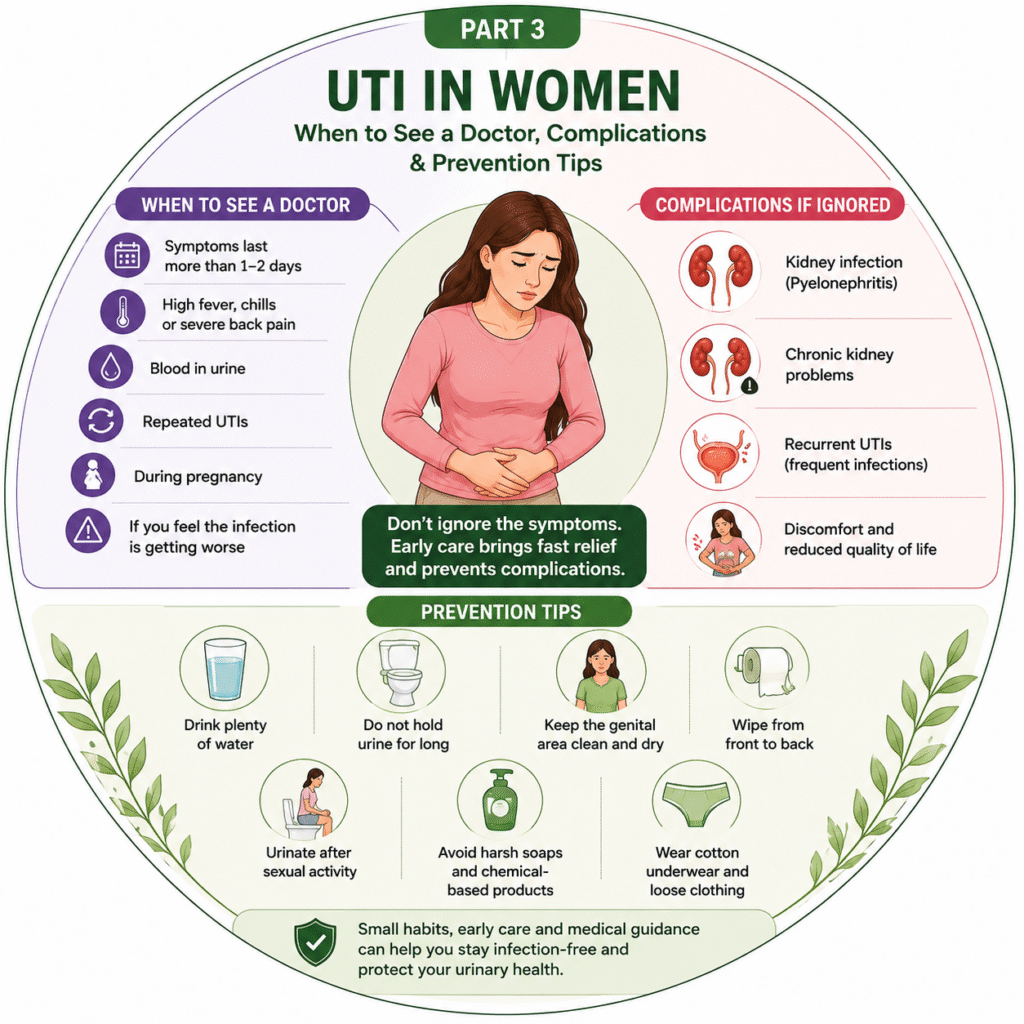
When Should You See a Doctor for UTI?

 One of the most common questions women have is — “When is it just normal discomfort, and when should I actually see a doctor?”

Because UTIs often start mildly, it can be difficult to judge the right time. Some symptoms feel manageable at first, and many women try to wait it out or self-manage. But there are certain signs where it’s important not to delay medical attention.

If the burning sensation or frequent urge to urinate does not start improving within a day or two, it usually means the infection is active and needs proper treatment. UTIs rarely resolve completely on their own once symptoms have clearly started.

Another important warning sign is fever, chills, or pain in the lower back. These symptoms suggest that the infection may not be limited to the bladder anymore and could be affecting the kidneys. At this stage, timely treatment becomes even more important to prevent complications.

The presence of blood in urine is another symptom that should never be ignored. Even though it can happen with UTIs, it always needs proper evaluation to confirm the cause and ensure correct treatment.

We also often see women who experience UTIs repeatedly within a short span of time. In such cases, the focus should not only be on treating the current infection but also understanding why it keeps happening — whether it’s related to lifestyle, hydration, hormonal factors, or other underlying issues.

In most cases, early consultation  leads to simple treatment and quick recovery. Delaying UTI symptoms and treatment care usually doesn’t make things easier — it only makes symptoms more uncomfortable and result in longer recovery .

best treatment for UTI in females

Leave a Reply

Your email address will not be published. Required fields are marked *

Related Posts